
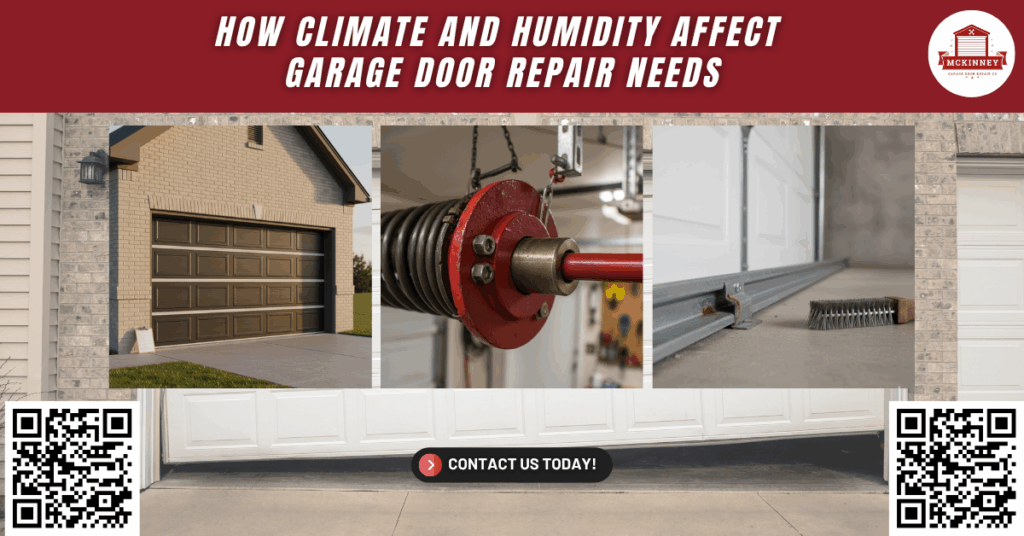
Houston weather keeps you guessing. One morning the air feels thick and heavy and by afternoon, a pop-up storm blows through with gusty winds and sticky heat. That is exactly the kind of environment that makes a garage door work harder than it should. When moisture and temperature jump around, parts swell, metal corrodes, electronics glitch, and small problems turn into a need for fast garage door repair.
Our service team at McKinney Garage Door Repair Co. recently helped a family near Discovery Green who could not get their door to close during a steamy August week. The wood overlay had absorbed moisture and expanded. The door rubbed the frame, the opener strained, and the safety sensors misread the beam. After a thorough inspection, careful alignment, a weather seal refresh, and opener recalibration, the door returned to smooth operation, and the garage stayed dry.
Home maintenance data and field experience show that humidity and climate are behind a large share of garage door service calls in coastal and subtropical regions like Houston. Swollen panels, rusted springs, fogged sensors, and noisy rollers are all common results of our local conditions. The good news is that the right maintenance plan, smart material choices, and timely repairs can prevent most of these issues and keep your garage door working like new for years.
Why Houston Climate Creates Unique Garage Door Challenges
Houston sits in a humid subtropical zone with long hot summers, frequent rain, tropical moisture events, and occasional cold fronts. This constant cycle of damp air and temperature swings affects every part of a garage door system. Moisture enters joints and fasteners. Heat expands metal. Sudden cooling makes metal contract. Wind-driven rain and airborne salt near Bay Area communities add to corrosion. Understanding these stressors helps you choose better materials, schedule the right maintenance, and know when to call for repair services.
The science in simple terms
Warm air holds more water. When that air cools against a colder surface like a garage door or metal track, water condenses as droplets. Those droplets trigger rust and corrosion on steel parts, and they can also cause sensors and wiring to misbehave. At the same time, wood and some composites absorb water vapor and swell. Later, when the air dries out, the same surfaces shrink. That constant movement loosens hardware and shifts alignment.
Material by Material: How Doors React to Humidity and Heat
Wood
Wood looks beautiful and boosts curb appeal, but it acts like a sponge. High humidity makes it swell. Lower humidity makes it shrink. Over time, that movement can cause rub points, panel bowing, cracked paint, and gaps along the perimeter. Clear coats and exterior paint slow moisture entry, but they do not stop it forever.
Practical tips
- Reseal or repaint wood surfaces every one to two years.
- Ask for backside sealing during installation so moisture does not sneak in from the garage interior.
- Add an adjustable bottom seal and check it each season.
- Schedule regular maintenance services before peak summer humidity.
Steel
Steel brings strength and security, but humidity and salt accelerate rust. Hinges, torsion springs, cables, struts, and fasteners are the first to show orange spots or dull pitting.
Practical tips
- Rinse the exterior with fresh water after coastal trips or storms that blow in salty air.
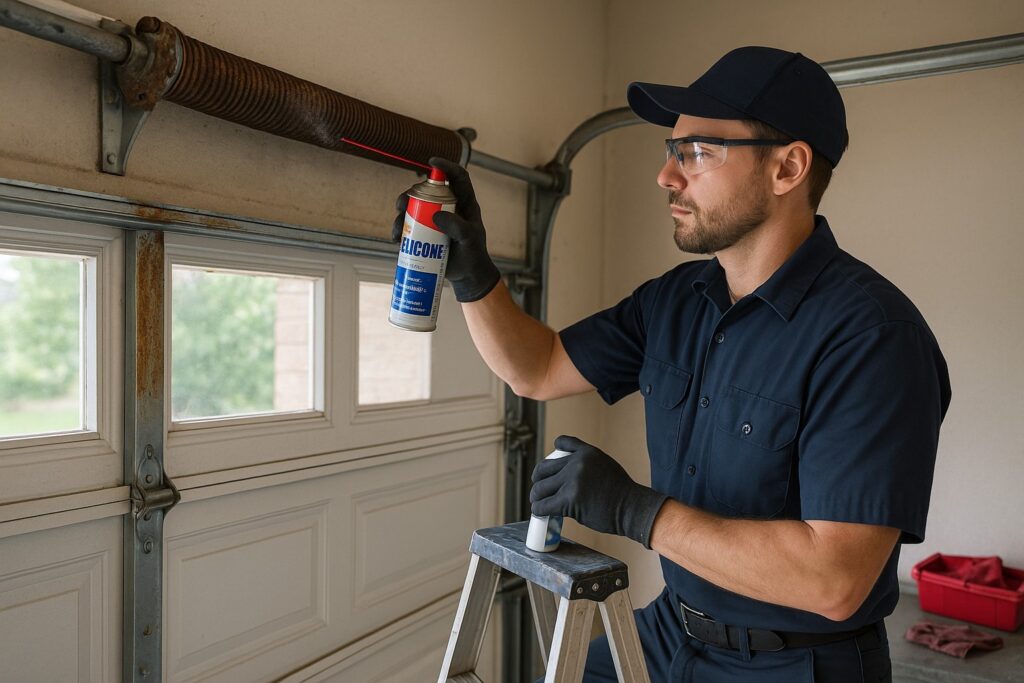
- Use a silicone or lithium garage lubricant on springs, rollers, and hinges.
- Touch up chips with color-matched rust-inhibiting paint to stop corrosion at the source.
Aluminum and glass
Aluminum resists rust but still expands and contracts with temperature changes. Glass sections heat up in the sun, which can loosen gaskets and create rattles or small leaks during heavy rain.
Practical tips
- Check fasteners at every seasonal tune-up.
- Replace aged gaskets and apply a clear sealant bead where needed.
- Consider low-emissivity glass to reduce heat gain and protect opener electronics from radiant heat.
Vinyl and composite
Vinyl faces less corrosion risk and handles moisture well, while composite blends deliver the look of wood with improved stability. Prolonged high heat can cause fade or mild distortion if shade and ventilation are poor.
Practical tips
- Maintain good attic and garage ventilation so trapped heat does not collect behind the door.
- Use gentle cleaners and soft brushes to avoid scratching protective surfaces.
- Confirm the insulation rating and upgrade if the garage doubles as a workshop or gym.
Components that Suffer First in Humid Climates
Springs and cables
Torsion springs and lift cables bear the heavy work. Humidity and condensation cause surface oxidation that weakens steel over time. A fatigued spring changes the balance of the door and forces the opener to overwork. Frayed cables are a safety risk.
What you can do today
- Listen for a sharp ping or pop and watch for uneven lifting.
- Do not attempt spring adjustments on your own. High-tension parts require trained technicians with the right tools.
- Ask for a thorough inspection during every tune-up and replace springs as a matched pair for precision balance.
Tracks, rollers, and hinges
Rust and grime increase friction and misalignment. Nylon rollers are quieter in humid climates than bare steel rollers, and sealed bearing rollers last longer.
Quick care routine
- Wipe tracks with a dry cloth and a small amount of mild cleaner.
- Never grease the tracks. Lubricate the roller bearings and hinge pins only.
- Replace egg-shaped or cracked rollers promptly to protect the track and opener.
Weather seals and thresholds
The bottom seal and perimeter weatherstripping block rain, pests, and wind-blown grit. Humidity hardens seals and reduces flexibility. Once they stiffen, gaps form, and water enters.
Checklist
- Inspect the bottom seal every season. If it is flat, brittle, or torn, replace it.
- Consider a threshold seal to bridge small slab unevenness common in older Houston garages.
- Add brush seals for commercial garage door applications where forklifts and frequent traffic stir up dust.
Openers, sensors, and smart controls
Electronics do not love damp air. Humidity can fog safety sensors and cause false reversals. Heat can stress printed circuit boards. Power surges during storms can damage logic boards.
Prevention
- Mount sensors slightly higher in flood-prone garages and align them during every inspection.
- Add a small dehumidifier or ventilation fan to reduce moisture buildup.
- Use a high-quality surge protector or dedicated outlet with whole-home surge protection.
Seasonal Playbook for Houston Homeowners
Spring tune-up
The air warms up, and moisture rises. Pollen collects on sensors and tracks.
- Clean sensor lenses with a soft, dry cloth.
- Rinse lower panels to remove grime and pollen.
- Lubricate hinges, springs, and rollers with silicone or lithium spray.
- Book a professional door service to check the balance and safety features before the summer heat.
Summer resilience
High heat expands metal and stresses motors. Afternoon storms drive water into small gaps.
- Confirm the door is properly balanced so the opener does not overheat.
- Replace tired weather seals before hurricane season.
- Consider insulation upgrades to stabilize temperatures for your home and your garage door opener.
Fall readiness
Leaves and debris settle in tracks. Cold fronts create larger temperature swings.
- Sweep and vacuum track areas.
- Tighten all visible fasteners.
- Request an inspection to verify cable condition and spring life as holiday traffic increases.
Winter protection
Cooler air plus a warm car creates condensation.
- Crack the garage door for a few minutes after parking to allow steam to escape.
- Wipe down metal parts if you see persistent droplets.
- Keep seals flexible with periodic cleaning and light treatment.
Energy Efficiency, Comfort, and Noise Control
Humidity affects comfort as well as mechanics. A poorly sealed door lets humid air rush into the garage, where it seeps into the home, forcing your HVAC system to run longer. An insulated door with a tight bottom seal and intact side seals keeps the garage drier and quieter. If the garage sits under a bedroom, insulation helps reduce opener noise and road noise, creating a calmer home environment.
Upgrades that pay off
- Insulated garage doors with higher R values for temperature stability.
- Quiet belt drive openers with soft start and soft stop.
- Nylon rollers and vibration isolators to reduce rumble.
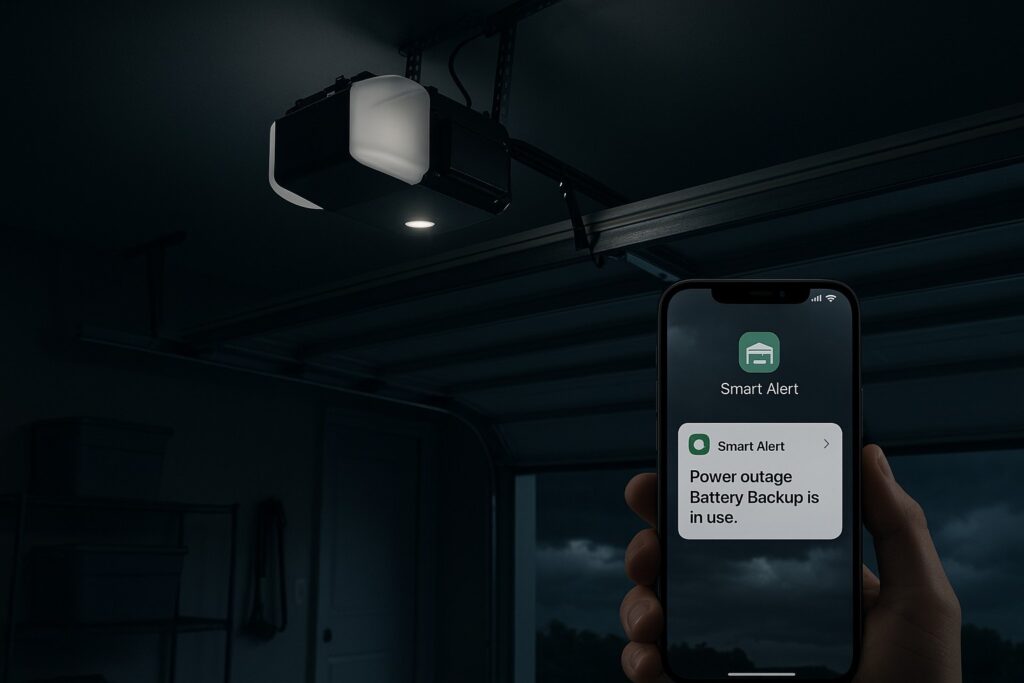
- Smart controls to check status and receive alerts during storms.
Residential and Commercial Considerations
Homes and townhomes
Homeowners value quiet operation, curb appeal, and safety. Climate control and humidity management protect stored items, vehicles, and hobby spaces.
Warehouses and small business spaces
Commercial garage door systems face more cycles, heavier doors, and frequent forklift traffic. Humidity multiplies dust and grit, which wears rollers and hinges faster.
Commercial best practices
- Increase lubrication frequency during peak humidity months.
- Add brush seals and overhead fans to move moist air.
- Schedule regular maintenance during off-hours to avoid downtime.
- Keep a parts kit on site for critical repairs, including rollers, hinges, seals, and remotes.
Flood Awareness and Storm Readiness
Heavy rain events and tropical systems can push water toward garage entries. Even a small amount of water damages the bottom panels, drywall, and stored goods.
Storm checklist
- Inspect threshold alignment and replace crushed bottom seals.
- Clear drains and driveway channels before major rain.
- Raise boxes and tools on shelves to protect them from water.
- After a flood, call for a thorough inspection to check for waterlogged insulation, swollen panels, and rust inside spring cones.
Smart Maintenance Calendar You Can Follow
- Every month: Visual check of springs, cables, rollers, and seals. Test auto reverse by placing a scrap piece of wood flat under the door and confirming the door reverses upon contact.
- Every three months: Clean tracks, wipe sensors, and lubricate moving parts.
- Every six months: Schedule a professional inspection and balance test.
- Every year: Refresh or replace weatherstripping and bottom seal. Repaint or reseal wood doors.
- After major storms: Request a post-storm inspection, especially if you see sagging, unusual noises, or water intrusion.
Real World Scenarios from Houston and Other Humid Coasts
- Swollen wood trim in Midtown: A homeowner noticed jerky movement and rubbing sounds. Inspection found moisture-swollen trim and a minor track shift. The fix included planing the rub point, resealing wood, aligning tracks, and adding a new bottom seal for a smoother closing motion.
- Rusty cable near Bay Area Boulevard: Salt-laden breezes corroded lift cables. We replaced cables with galvanized options, added sealed bearing nylon rollers, and set a quarterly cleaning plan.
- Sensor errors during muggy mornings: Condensation fogged lenses and caused false reversals. Cleaning the lenses, realigning brackets, raising sensor height slightly, and improving ventilation solved the issue.
- Commercial door at a small logistics business: Frequent cycles plus humidity wore out hinges quickly. We upgraded to heavier-duty hinges, added brush seals, and built a preventive maintenance schedule that cut downtime to near zero.
Selecting the Right Door and Parts for Houston Conditions
Door construction
- Steel with baked-on protective coatings for strength and rust resistance.
- Composite cladding for the look of wood without constant swelling.
- Vinyl in high splash zones to reduce corrosion risks.
Insulation
- Polystyrene is budget-friendly, while polyurethane foam offers a higher R value and added panel rigidity, which fights warp.
Hardware and springs
- Choose oil-tempered springs sized for your door weight and cycle needs.
- Specify sealed bearing nylon rollers for quiet, low-friction motion.
- Use stainless or zinc-coated fasteners where practical.
Openers and controls
- Belt drive units for quieter neighborhoods and rooms over the garage.
- Battery backup for power outages during storms.
- Smart controls for alerts, schedules, and hands-free closing.
Safety First: What Not to Do
- Do not try to remove or wind torsion springs without training. These parts store serious energy.
- Do not grease the tracks. It attracts grit that causes binding.
- Do not ignore grinding or banging noises. They signal evolving damage.
- Do not bypass safety sensors. The auto reverse system protects people, pets, and vehicles.
DIY Care vs Professional Service
You can handle light cleaning, seal checks, and lubrication. You can also replace remote batteries and tighten obvious loose screws. Professional technicians handle spring work, cable replacement, opener calibration, off-track doors, panel replacement, and thorough inspection. A combined approach keeps costs low and reliability high.
Troubleshooting Guide You Can Try Before You Call
- Door stops and reverses
- Wipe sensor lenses and confirm alignment.
- Remove spider webs and leaves near the beam.
- Make sure sunlight glare does not blast the sensor directly at certain hours.
- Loud squeaks and grinding
- Apply approved lubricant to rollers and hinges.
- Check for a flattened roller or a hinge with a visible crack.
- If noise remains, schedule a service appointment for a deeper inspection.
- Gaps under the door
- Inspect the bottom seal for cracks or compression set.
- Check for slab unevenness and consider a threshold kit.
- Verify door balance. An unbalanced door often leaves a corner gap.
- Opener strains or stalls
- Test the manual lift with the opener disconnected. The door should move smoothly with a steady hand.
- If it feels heavy or jerky, springs or rollers may be worn. Call our technicians for safe adjustment.
- Water inside after storms
- Confirm seal health and drainage paths.
- Add a small curb-style threshold and renew side seals.
- If water tracks in from vehicle tires, add floor mats and improve ventilation to dry the space faster.
When to Replace Instead of Repair
- Repeated swelling and warping on older wood doors.
- Widespread rust that weakens panels or struts.
- Severe storm damage or impact damage that bends tracks and panels.
- Openers with obsolete safety features or repeated circuit board failures.
A new garage door paired with modern openers and fresh weather seals can transform comfort, security, and noise level. For many homes, this upgrade also improves energy savings and property value.
Frequently Asked Questions (FAQs)
Q1. How does indoor garage humidity affect my car and stored belongings?
High humidity inside the garage can lead to condensation forming on your car, tools, and stored items, which may promote rust, mold, or damage to electronics—even if the garage door itself appears fine.
Q2. Can I install a dehumidifier in the garage, and will it really help my garage door’s lifespan?
Yes — installing a dehumidifier can lower moisture levels, reducing the chances of rust and wood swelling, and thereby helping components like springs, rollers, and panels last longer.
Q3. Does changing my garage door color or finish help with humidity issues?
Changing to a lighter or UV-resistant finish helps reduce heat absorption, which in turn lessens material expansion and contraction due to humidity and temperature swings, improving longevity.
Q4. If I rent a property, what should I check to ensure my landlord has covered humidity-related garage door care?
Ask whether the weather-sealing, bottom threshold, and ventilation have been maintained or replaced recently, and whether routine inspections of springs, cables, and tracks were done within the past 12 months.
Final Thoughts
Climate and humidity never take a day off in Houston. Moist air, intense sun, wind-driven rain, and sudden temperature changes all push your garage door system to its limits. Yet with the right plan, you can protect your door, prevent breakdowns, and enjoy quiet, reliable operation. Schedule regular maintenance, keep moving parts lubricated, refresh weather seals, and do quick visual checks after storms. When something sounds wrong, looks crooked, or feels heavy, call for professional help before a small issue becomes a costly repair.
Your garage door is the largest moving system in your home. Treat it with the same attention you give your HVAC system or roof, and it will reward you with smooth operation, better comfort, and fewer surprises year after year.
How Can McKinney Garage Door Repair Co. Help You?
Our expert team is ready to help today. We bring years of experience with Houston climate challenges, and we tailor every job to your specific needs. From routine tune-ups to complex repairs and new installation services, our skilled technicians deliver quality work with careful attention to safety, precision, and customer satisfaction.
What we do for homes and businesses
- Garage door repair and maintenance services for all major brands
- Broken spring and cable replacement with precision balance and testing
- Garage door opener troubleshooting, replacement, and smart control setup
- Weather seal, threshold, and insulation upgrades for better comfort and energy savings
- Thorough inspection after storms, humidity spikes, or flood events
- Commercial garage door care with proactive schedules to reduce downtime
- The gate needs support and keypad programming for integrated entries
Let us make your garage door quiet, smooth, and reliable.
📍 Address: 1200 McKinney St, Houston, TX 77010, United States
📞 Phone: (281) 549-0009
Call, message, or book your appointment to get started. If you have questions about materials, operation, parts, or maintenance, our service team will explain every step in clear language and make sure you feel confident about your garage door from the first visit.